Plate · Drought Prone Area Programme (DPAP) programme.
About the programme.
Soil and water conservation, groundwater recharge and livelihood support in Bhatkuli and Daryapur, Amravati. The programme ran from 2004 to 2010.
Programme details
Working period
2004–2010
Project area
Bhatkuli and Daryapur, Amravati
Role
Key Resource Centre
Funding organization
DRDA / Government of Maharashtra
Read programme activities+
8.
Scheme/ Project Name: Drought Prone Area Program
❖ Funding Organization: District Rural Development Organization (DRDA) /
Government of Maharashtra
❖ Project Area/Work Done Area: Amravati District – Bhatkuli & Daryapur Taluka
❖ Working Period: 2004 To 2010
❖ Role & Responsibilities:
▪ Role: Key Resource Center
▪ Responsibility:
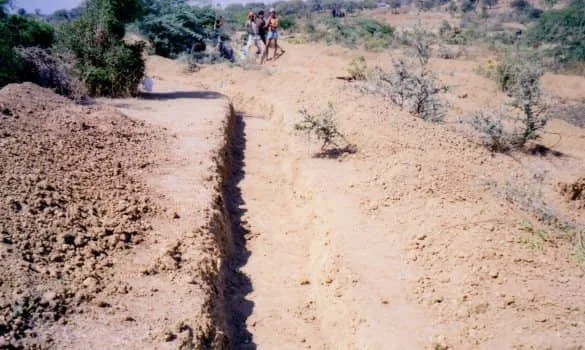
➢ Focused on soil and water conservation activities to improve groundwater levels and prevent
soil erosion.
➢ Promoted watershed development for sustainable use of land, water, and vegetation
resources.
➢ Conducted street plays and awareness programmes on drought management and natural
resource conservation.
➢ Organized animal diagnosis and health camps to improve livestock health and productivity.
➢ Formed and strengthened Self Help Groups (SHGs) to create local employment and income
generation opportunities.
➢ Encouraged afforestation and pasture development to restore ecological balance.
➢ Provided training and capacity-building to farmers and community members on water
harvesting, crop diversification, and soil management.
➢ Ensured community participation in planning and implementing watershed and drought
mitigation activities.
➢ Monitored the impact of interventions on agricultural productivity, water availability, and
livelihood security.
Drought Prone Area Program
Read more about this programme+
Watershed Development (DPAP)
Importance of Rain Fed Agriculture
Rainfed agriculture is practiced in 80% of the world’s physical agricultural area and generates 62% of the world’s staple food (FAOSTAT 2005).
Some 93% of farmed land is rain fed in Sub-Saharan Africa, 87% in Latin America, 67% in the Near East and North Africa, 65% in East Asia, and 58% in South Asia (FAO 2002).
Rainfed agriculture generates most of the food in the world and majority of the poor people are dependent on it for food, incomes and livelihood security.
Under nourishment is also very high in the semi arid and dry sub humid climates which are dominated by rain fed agriculture.
There is an established strong correlation between agricultural production and sustainable development ( FAO,2002).
Definition and importance of watershed development in rain fed Areas
It is to harmonize the use of water, soil, forest and pasture resources in a way that conserves these resources while raising the agricultural production both by conserving moisture in the soil and by increasing irrigation through tank and aquifer based water harvesting.
Watershed programs normally generate large number of rural employment, more irrigation coverage and increased cropping intensities along with soil and water resource conservation.
1% increase in global agricultural production can reduce number of global poor people by around 0.5 to 0.7% (WB,2005), hence, watershed development in the rain fed areas do have significant impact of poverty reduction.
Mean cost benefits ratio of watershed programs are around 1: 2.14 which is considered significant in terms of social sector investment.
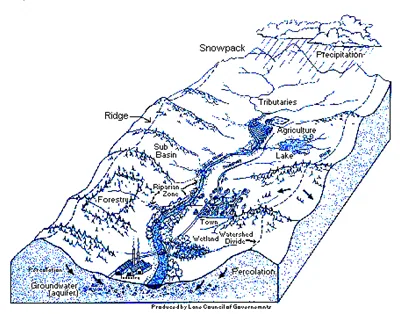
Watershed Delineation
Imagine a watershed as an enormous bowl. As water falls onto the bowl’s rim, it either flows down the inside of the bowl or down the outside of the bowl.
The rim of the bowl or the water-shed boundary is sometimes referred to as the ridgeline or watershed divide. This ridge line separates one watershed from another.
Why Watershed Development?
Man and his environment are interdependent. Any change in the surrounding environment directly affects the people living therein. A degraded environment results in a degraded quality of life for the people. Thus a programme to reduce poverty and improve the standard of living of the people must be aimed at improving the environment they live in. Environmental degradation does not recognize administrative and political boundaries (e.g. village, taluka, etc.) A watershed provides the best environmental unit for planning a development program through optimum utilization and management of Natural Resources.
About DPAP
(DPAP) is the earliest area development programme to tackle the special problems faced by those fragile areas, which are constantly affected by severe drought conditions. These areas are characterized by large human and cattle populations which are continuously putting heavy pressure on the already degraded natural resources for food, fodder and fuel. The major problems are continuous depletion of vegetative cover, increase in soil erosion and fall in ground water levels due to continuous exploitation without any effort to recharge the underground aquifers.
Objectives
The basic objective of the programme is to minimize the adverse effects of drought on the production of crops and livestock and productivity of land, water and human resources thereby ultimately leading to the drought proofing of the affected areas.
The programme aims at promoting overall economic development and improving the socio-economic condition of the resource poor and disadvantaged sections inhabiting the programme areas through creation, widening and equitable distribution of the resource base and increased employment opportunities.
The objectives of the programme are being addressed in general by taking up development works through watershed approach for land development, water resource development and a forestation / pasture development.
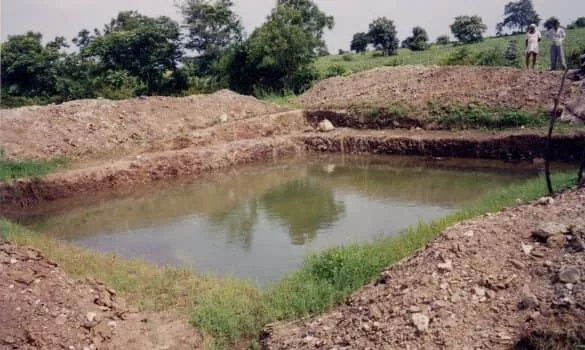
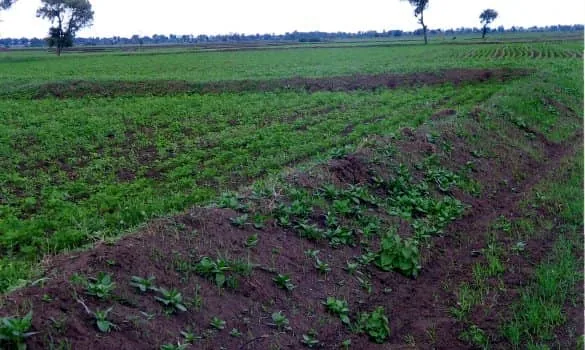
The overall productivity of land and the water table have increased and there has been a significant impact in checking soil erosion by water and wind. The programme has also helped in overall economic development in the project area Main objective to undertake this programme is soil & water conservation also raise the water level of that area. In view of this we are working in Amravati Distt. In Amravati we are working in Bhatkuli & Daryapur Tahsil. We organize street play, animal Diagnosis & Health camp under DPAP Programme also SHG group are formed.
Saiprem gramin vikas sanstha successfully completed DPAP programme in Amravati district
Increased Ground Water table.
Availability of water for other domestic and Agriculture purpose through check dams.
Increased Fodder availability.
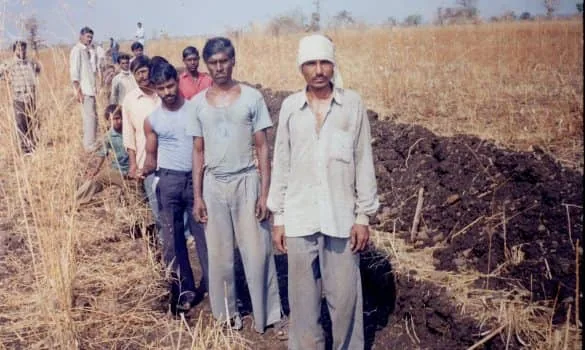
Employment in own village through watershed treatment work.
New technologies in Agriculture, Horticulture and Animal Husbandry reached at grass root.
Women become bolder, taking active part in village development, initiated group businesses.
Barron land brought under cultivation.
Increased income through introduction of new cash crops and their management.
Landless families got livelihood source in own village, so migration rate decreased.
Marginal farmers started allied income generation activities and increased income.
Village watershed committee now looking after all the activities and taking the programme ahead.
Photographic record.
Plate · SGVS Drought Prone Area Programme (DPAP) record.
Plate · SGVS Drought Prone Area Programme (DPAP) record.
Plate · SGVS Drought Prone Area Programme (DPAP) record.
Plate · SGVS Drought Prone Area Programme (DPAP) record.
Related records
Other work in the record.
Explore related programmes by field, period and place.