9.
Scheme/ Project Name: Gram Swachhata Abhiyan
❖ Funding Organization: State Government, Water & Sanitation Department
❖ Project Area/Work Done Area: Village Name:Wadala, Tal:Bhatukali, Dist:Amravati
❖ Working Period: 2004 To Ongoing
❖ Role & Responsibilities:
▪ Role: Support Organization
▪ Responsibility: Campion trough flowing activities conducted
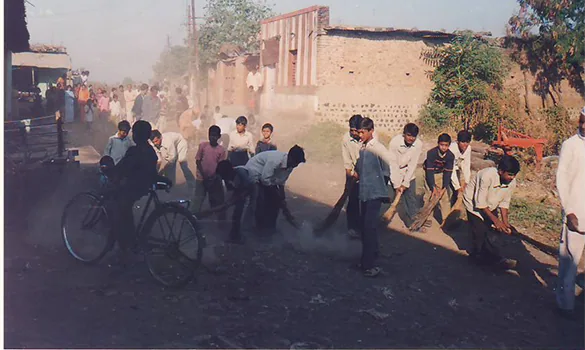
➢ Organizing cleanliness drives in rural areas
➢ Conducting awareness sessions on hygiene and waste management
➢ Encouraging community participation and youth involvement
➢ Supporting village panchayats in maintaining clean surroundings
➢ Promoting use of fuel-saving and environment-friendly technologies
Read more about this programme+
Gram Swachata Abhiyan
Our organizations participate in Sant Gadgebaba Gram Swachata Abhiyan in village Wadala Tq. Bhatkuli, Distt. Amravati. Cleanness and Hygiene has its own significance from very beginning of human civilization. it's importance has been more emphatically conveyed by saint gadge maharaj in rural parts of Maharashtra. The More cleaner we opt for the more problem will be done away with taking into consideration above aspect our NGO started implementing from Swachhata Cmpaign with the help of its workers in the many villages following NGO's activity. This Campaign has been implemented in Bhatkuli and Daryapur Taluka of Amravati District.
About Program
GADGE BABA, the 19th century folk hero who inspired people with his philosophy of self-reliance and community-sharing, would have been delighted at the changes that are being rought in the villages of Maharashtra. Clean surroundings, self-help schemes, use of fuel-saving devices, increased environmental awareness and the strengthening of women's groups are just some of them. Gadge Baba was born in 1876 in a washer man's family in Amravati, in northeastern Maharashtra. He lived a life of poverty, at first tilling his fields and then later, when he lost his land, working as a wage labourer.
One day , he was in a field, keeping birds away from the grain. A assing sadhu mocked his efforts and asked him if he owned the grain.That wishes moment of realization. The values of community-sharing and giving, which were revealed to him after the sadhu's comment, stayed with him for the rest of his life and became the basis of his teachings. His teachings were simple — give food to the hungry and shelter to the needy and protect the environment. A common man's teacher, the Baba travelled all over the countryside, carrying his trademark broom and wearing his food pan upturned on his head. As soon as he entered a village he would start cleaning the roads and gutters, telling the people that their felicitations would have to wait until his work was done. With the money that people gave him, he built dharmashalas, educational institutions, animal shelters, and hospitals — almost all of which are still functioning. His campaign was immensely popular. After his death in 1956, Gadge Baba and his movement slipped easily in to folklore. By taking inspiration from them govt introduced cleanliness program at rural level.
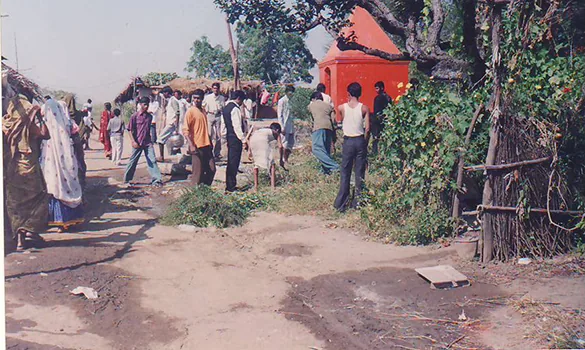
Photographic record.
Plate · SGVS Gram Swachata Abhiyan record.
Related records
Other work in the record.
Explore related programmes by field, period and place.